On the First Anniversary of Robert’s Passing

Today marks the first anniversary of our beloved Robert’s passing – father, husband, friend and fellow Catholic. We, his widow and children, would like to honor this day with a short article.

We had today a very reverent Memorial Requiem Mass at our local SSPX chapel in Linden, to which many kindly came to pray for Robert’s soul. Father John Carlisle celebrated the Mass, assisted by four reverend altar boys, among them our son Robert. I think Robert would have been pleased to see how people came together to remember him and pray for his soul.

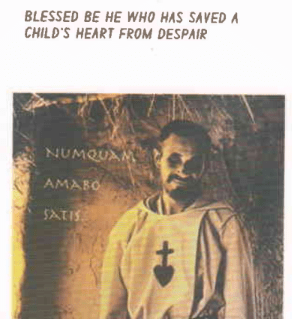
Our daughter Isabella put a memorial holy card together for this occasion, and we publish it here as a photo because it tells a whole story in itself. It depicts the image of a great saint, St. Charles de Foucauld (d. 1916), whom my husband had long admired, especially after a religious had shown him a room filled with photos of Charles de Foucauld who showed his transformation from a decadent and womanizing officer to an ascetic priest living in the desert trying to convert Muslims.

On the day when Charles de Foucauld was killed by some raiding Muslims, he wrote a letter quoting his own mentor and confessor, Father Henri Huvelin, who had said on his deathbed, in Latin: “Numquam amabo satis.” “I will never love enough.”

My own husband, Robert, was so touched by that quote that, in the last weeks of his own life here on earth, he discussed this Latin quote with several of his interlocutors, among them a former student of his from Christendom College and our pastor, Father Carlisle. Having been stirred to reflections himself by that quote and conversation, Father Carlisle then made a picture of the saint with that Latin quote, to be hung in his own office. One day, he came for a pastoral visit and showed this image to a visibly touched Robert Hickson. But not only this. When Robert had passed and was lying in his casket on the day of his wake, Father kindly brought that very framed picture with him and laid it on the casket, right above Robert’s head and heart. Father then later gave it to us as a grieving family.

So in order to remember that whole circle of a quote from a saintly priest that was written down by a saint and that was later cherished by an honorable Catholic layman in his last weeks of life, and then again by a saintly priest, our Isabella placed that very picture that Father had made onto our holy card in remembrance of today, also as a sign of gratitude for Father’s pastoral care and love for our family in difficult times. Our readers can read here a short, stirring account of Saint Charles de Foucauld’s life and that Latin quote.

Numquam amabo satis.

As if in God’s beautiful Providence, that was not yet enough, Robert actually had another conversation, the last deep and more intellectual conversation here on earth, with another priest who brought him in the last weeks of his life the sacraments. They spoke about Our Lady, whom our Robert loved so much. And Father brought up to Robert the quote “De Maria, numquam satis.” “Concerning Mary, never enough.” This statement written by St. Bernard of Clairvaux was later picked up by St. Louis Marie de Monfort and brought into a clarifying light with his commentary: “And yet in truth we must still say with the saints: De Maria numquam satis: We have still not praised, exalted, honored, loved and served Mary adequately. She is worthy of even more praise, respect, love and service.”

The priest later sent me a text message with that quote, saying that Robert had asked him to send me that quote because he loved it so much.

What a beautiful summary of a man’s life, what a fruit of a life of faith these two Latin quotes are! They seem like the peak of a mountain in a life that we all are to climb: at the end stands love, love of God and His Blessed Mother, and love of man. We can never love enough.

Yet here comes another lovely aspect to the story.

On top of that image of St. Charles de Foucauld on the holy card our daughter placed a quote from a French author, George Bernanos, and that quote itself has a deep meaning for our family, as well. The quote says: “Blessed be he who has saved a child’s heart from despair.”

Robert loved that quote so much that he wanted it to be on his tombstone. And so it will be, in only a few weeks, on his grave in the cemetery of the St. Thomas Aquinas Seminary of the Society of St. Pius X in Dillwyn, Virginia.

After his passing, Loreto Publications published a final collection of Robert’s essays. The book, entitled Ordo Dei: Collected Essays by Robert Hickson, contains all of his essays that he ever published on this website, Ordodei.net. And when we held the book in our hands, we realized that Robert’s last essay published by him here on earth dealt exactly with that very quote from George Bernanos!

We were also touched to see that the first essay on this website – and thus also in the book – was an essay about his most favorite author, Hilaire Belloc, entitled “Sentimentalists and Barbarians – Contrasting Thoughts of Hilaire Belloc in 1912 and G.K. Chesterton in 1934.” We can only recommend our readers to look it up.
The introduction to this last collection of essays – several other essay books had been previously published by Loreto Publications, one of them with a preface by Archbishop Carlo Maria Vigano – was written by Brother Andre Marie, M.I.C.M. We will end this this short commemoration of our beloved Robert Hickson with some quotes from Brother’s introduction, and our attentive readers will notice that, here, too, a circle is closing:

Dr. Robert Hickson loved words. Those of us who knew him can vouch for this fact. Yet, Robert was not a man who loved words more than that thing which it is the purpose of words to convey: the truth. A classicist who studied and taught Greek and Latin letters, Robert relished the words attributed to Saint Bernard of Clairvaux: Cui sapiunt omnia prout sunt, hic est vere sapiens (“He is truly wise who savors all things just as they are.”) He would point out that the Latin word for wisdom has for its root—as can be seen in this very passage from Saint Bernard—the verb, sapere “to relish.” [….]

Robert would examine the mystery that lay behind such words as the calamitous “power without grace” that Evelyn Waugh put on the lips of Saint Helena, or the lovely “fresh supernatural Beatitude” that George Bernanos puts in the mouth of the eponymous curé in his Diary of a Country Priest: “Blessed be he who has saved a child’s heart from despair,” words Robert could rarely say without becoming emotional (and which, I am given to understand, will grace his headstone in Dillwyn, Virginia).

We thank God for Robert.

We miss you very much, Robert.

May you rest in peace. Requiescat in pace.
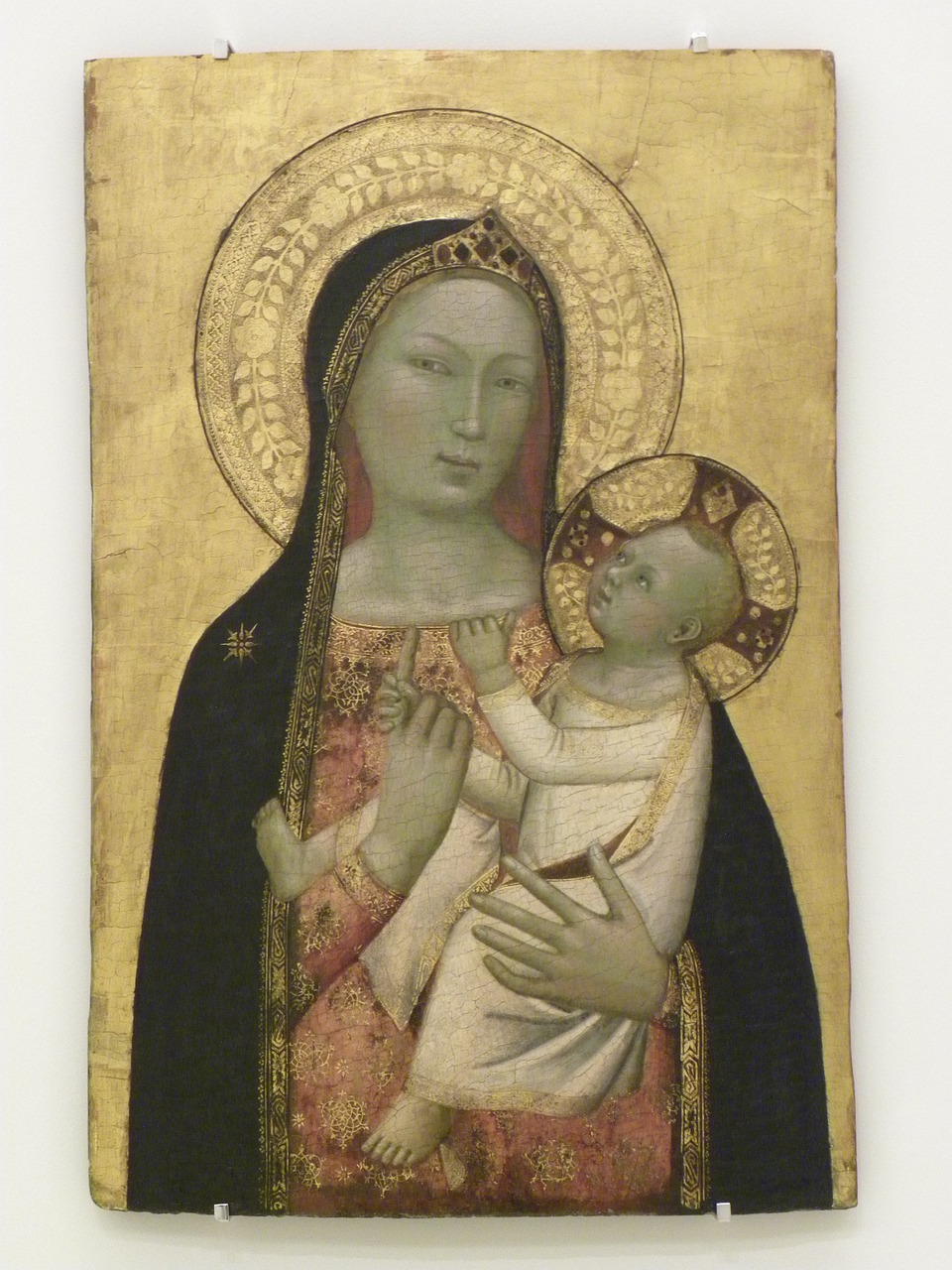
Hilaire Belloc’s Poems on Courtesy: His Poignant Humility before Our Lady and Child

Dr. Robert Hickson

28 August 2022

Saint Augustine of Hippo (d. 430 AD)

Anthony S. Fraser (d. 2014)

Epigraphs

“For you that took the all-in-all the things you left were three. /A loud voice for singing and keen eyes to see, / And a spouting well of joy within that never yet was dried! / And I ride.” (Hilaire Belloc’s “The Winged Horse,” Stanza IV)

***

“I challenged and I kept the Faith, / The bleeding path alone I trod; / It darkens. Stand about my wraith, / And harbor me—almighty God.” (Hilaire Belloc’s “The Prophet Lost In The Hills At Evening” —the Last Stanza)

***

“The frozen way those people trod / It led towards the Mother of God; / Perhaps if I had travelled with them / I might have come to Bethlehem.” (Hilaire Belloc’s “Twelfth Night,” —the Last Stanza)

***

While I recently re-read a selective brief anthology of Hilaire Belloc’s verse, I found myself recurrently moved by his gracious depictions of the Blessed Mother and Her Consoling Child. It prompted me, as well, to recall the new Beatitude as expressed in Georges Bernanos’ spiritual novel, The Diary of a Country Priest (1936 in French, 1937 in English) The main character, recalling his lonely childhood, suddenly said: “Blessed be he who has saved a child’s heart from despair.

In view of his adventurous and rumbustious manhood, Hilaire Belloc gradually disclosed his “manly spiritual childhood.

I wish now to present some representative examples from Hilaire Belloc’s own varied verses, starting with his verses entitled “In a Boat,” “Twelfth Night, and some other exemplars, until we finally and happily face the gracious words of “Courtesy” and the counterpointing CODA on Sorrow of Soul.

All references are to 1951-selection, as published before Belloc died on 16 July 1953. (See H. Belloc’s Songs of The South Country (London: Gerald Duckworth & CO., 1951), pages 32.)

Hilaire Belloc’s evocative Marian Verse is called “In a Boat”:

Lady! Lady! / Upon Heaven-height, / Above the harsh morning / In the mere light. / Above the spindrift / And above the snow, / Where no seas tumble, / And no winds blow. / The twisting tides, / And the perilous sands / Upon all sides / Are in your holy hands. / The wind harries / And the cold kills; / But I see your chapel / Over far hills. / My body is frozen, / My soul is afraid: / Stretch out your hands to me, / Mother and maid. / Mother of Christ, /And Mother of me, / Save me alive / From the howl of the sea. / If you will Mother me / Till I grow old, / I will hang in your chapel / A ship of pure gold.

Hilaire Belloc’s additional Verse, touching upon Sacred History, is entitled “Twelfth Night”:

As I was lifting over Down / A winter’s night to Petworth Town, / I came upon a company / Of Travellers who would talk with me. /

The riding moon was small and bright, / They cast no shadows in her light. / There was no man for miles a-near. / I would not walk with them for fear. /

A star of heaven by Gumber glowed, / An ox across the darkness lowed, / Whereas a burning light there stood / Right in the heart of Gumber Wood. /

Across the rime their marching rang, / And in a little while they sang; / They sang a song I used to know, / Gloria in Excelsis Domino. /

The frozen way those people trod / It led towards the Mother of God; / Perhaps if I had travelled with them / I might have come to Bethlehem.

Such art and such faith and implicitness help prepare us to savor Belloc’s poem, “Courtesy.”

Courtesy”

by Hilaire Belloc

Of Courtesy, it is much less / Than Courage of Heart or Holiness, / Yet in my Walks it seems to me / That the Grace of God is in Courtesy. /

On Monks I did in Storrington fall, / They took me straight into their Hall; / I saw Three Pictures on a wall, / And Courtesy was in them all. /

The first the Annunciation; / The second the Visitation; / The third the Consolation, / Of God that was Our Lady’s Son. /

The first was of St. Gabriel; / On Wings a-flame from Heaven he fell; / And as he went upon one knee / He shone with Heavenly Courtesy. /

Our Lady out of Nazareth rode – / It was Her month of heavy load; / Yet was her face both great and kind, / For Courtesy was in Her Mind. /

The third it was our Little Lord, / Whom all the Kings in arms adored; / He was so small you could not see / His large intent of Courtesy. /

Our Lord, that was Our Lady’s Son, / God bless you, People, one by one; / My Rhyme is written, my work is done.

CODA

The Prophet Lost In The Hills At Evening

Strong God which made the topmost stars
To circulate and keep their course,
Remember me; whom all the bars
Of sense and dreadful fate enforce.

Above me in your heights and tall,
Impassable the summits freeze,
Below the haunted waters call
Impassable beyond the trees.

I hunger and I have no bread.
My gourd is empty of the wine.
Surely the footsteps of the dead
Are shuffling softly close to mine!

It darkens. I have lost the ford.
There is a change on all things made.
The rocks have evil faces, Lord,
And I am awfully afraid.


Remember me: the Voids of Hell
Expand enormous all around.
Strong friend of souls, Emmanuel [Christ],
Redeem me from accursed ground.

The long descent of wasted days,
To these at last have led me down;
Remember that I filled with praise
The meaningless and doubtful ways

That lead to an eternal town.

I challenged and I kept the Faith,
The bleeding path alone I trod;
It darkens. Stand about my wraith,
And harbour me — almighty God.

–Finis–

© 2022 Robert D. Hickson

A 1903 French Novel’s Unexpected Insights Concerning the Sorrows of Mary

Dr. Robert Hickson

25 March 2021

Feast of the Annunciation: the Incarnation

A 1903 French Novel’s Unexpected Insights Concerning the Sorrows of Mary: J.K. Huysmans’ The Oblate of St. Benedict

Epigraphs

“What a strange part, great and yet limited, did Sorrow play in the life of the Virgin!” (J. K. Huysmans, The Oblate of St. Benedict (1903, 1996), page 241—my emphasis added)

***

“She [Sorrow] now ruled supreme and, from the fury of he onslaught, it might have been thought that Our Lady had drained the cup to the last dreg. But it was not so.” (J.K. Huysmans, The Oblate of St. Benedict (1903), page 243—my emphasis added)

***

J.K. Huysmans’ 1903 novel The Oblate of St. Benedict begins his Chapter VIII with the following words:

The Feast of the Assumption [15 August] was over….The church, now empty, exhaled the soothing perfume….the scent symbolized the sepulchre whence the Virgin rose to take her place beside Her Son….

All day the heat had been overwhelming. Benediction had been preceded by the solemn Procession which [King] Louis XIII instituted in memory of the consecration of his kingdom to Our Lady, and Durtal [the novel’s protagonist and himself a gradual convert to the Catholic Faith], on reaching home, sat down in the shade of the great cedar tree.

There he [Durtal] meditated upon the Festival which was for him a Festival of Liberation from pain and the chief Festival of Our Blessed Lady. The day prompted him to contemplate the Madonna from a special point of view, for it brought him face to face with with the dreadful problem of Pain and Sorrow.1 (241—my emphasis added)

Huysmans admits his yearning “attempt to understand the reason for the existence of sorrow” (241), and himself going all the way “back to man’s beginning, to Eden, where Sorrow was born, the moment Adam became conscious of sin.” (241)

But for those who remain loyal to irreformable Catholic doctrine, the mystery of the original and abiding Purity (and Sinlessness) of the Blessed Virgin Mary always presents itself, often amidst Sorrow, and then almost always knowingly evokes our special love. Huysmans’ words also come to touch upon this mysterious matter:

Sorrow had held the Son [Jesus] in her grip for some hours. Over the Mother [Virgin Mary], her hold was longer, and in this longer possession lies the strange element.

The Virgin was the one human creature whom, logically, she [Sorrow] had no right to touch. The Immaculate Conception should have put Mary beyond her [Sorrow’s] reach, and [Virgin Mary,] having never sinned during her earthly life, she [Mary] should should have been unassailable, and exempt from the evil onslaughts of Sorrow.

To dare to approach her [Mary], Sorrow required a special leave from God and the consent of the Mother herself, who, to be the more like unto her Son and to co-operate as far as she [Mary] could in our Redemption, agreed to suffer at the foot of the Cross the terrors of the final catastrophe. (243—my emphasis added)

Now we shall go with the Narrator—and with the fresh perceptions of Durtal—into some other deeper matters of moment:

But in dealing with the Mother [Mary], Sorrow at the outset does not have full scope.

She [Sorrow] indeed set her mark on Mary from the moment of the Annunciation when Our Lady in a Divine light perceived the Tree of Golgotha. But after that, Sorrow had to retire into the background. She [Sorrow] saw the Nativity from afar, but could not make her way into the cave of Bethlehem. Only at the Presentation in the Temple, at Simeon’s prophecy, did she [Sorrow] leap from her ambush and planted herself in the Virgin’s [Mother Mary’s] breast. From that moment she took up her abode there, yet she [Sorrow] was not an unchallenged mistress, for another lodger, Joy, also dwelt there, the presence of Jesus bringing cheerfulness to His Mother’s soul. But after the treachery of Judas Iscariot, Sorrow had her revenge. She now ruled supreme and, from the fury of her onset, it might have been thought that Our Lady had drained the cup [chalice!] to the last dreg. But it was not so.

Mary’s excruciating grief at the Crucifixion had been preceded by the long-drawn anguish of the Trial; it again was followed by another period of suspense, [a period] of sorrowful longing for the day when she should rejoin Her Son in Heaven, far removed from a world that had covered them with shame. (243-244—my emphasis added)

In such words, we may see and cherish another heartful presentation of how the Blessed Mother uniquely co-operated with—and mediated for—the Humility of God in the Hypostatic Union: i.e., for Her own beloved and nourished Son, Christ Jesus. (But there are still those who say that, despite her perfections, Mary is No Co-Redemptrix, Nor a Mediatrix of All Graces.)

CODA

Because it came only from a small, incomplete fragment of a footnote, it may be of some interest to the reader to know how I recently, and so unexpectedly, discovered (and but partly read) the writings of Joris-Karl Huysmans (1847-1907), especially his novel, The Oblate of St. Benedict (1903).

Reading the Epilogue of D.B. Wyndham Lewis’ 1959 book, A Florentine Portrait: Saint Philip Benizi (1233-1285), I came in contact (at the bottom of page 133) with an abbreviated and rather arcane footnote: “L’Oblat, 1903.” Deciding then to locate, if I could, who it was who wrote these stirring words (and where), I went on an adventure and search. Here, without any original French pagination, are the later English words on the Blessed Mother that I found—as translated by D.B. Wyndham Lewis, himself a Catholic scholar, and written from his heart on page 133 in his own 1959 Epilogue about the Servites of Our Lady’s Sorrows:

It needed God’s special permission and the consent of the Mother, who, to make herself more like her Son and to co-operate, according to her capacity, in our redemption, accepted at length, under the Cross itself, the frightful agonies of the Consummation.

FINIS

© 2021 Robert D. Hickson

1J. K. Huysmans, The Oblate of St. Benedict (Cambridge, UK: Dedalus European Classics, 1996—first published in in French in 1903; first English edition was in 1924.) The current edition, moreover, contains XVI chapters, ending on page 303. All further references will be to this Dedalus edition. For convenience, the page references will be placed above in parentheses in the main body of this short essay and commentary.